

THE SENTENCE
Make the page sound the way
it sounds in your head.
And watch the reader fall in.
You already know how to write.
The ache is finer than that, and you've felt it for years.
You hear the thing whole. It arrives in you with its own temperature, its own pressure, a line so right it lifts the hair on your arms. And then you go to write it down, and it cools on the way to the page. The voice you heard so clearly inside reaches you a little muffled. A little less. Close, almost, but not the thing itself.
You read it back and you know. You can't always say what's wrong, but your ear knows. There's a gap between what you meant and what made it to the page, and you've learned to live inside that gap, calling it good enough, because no one ever taught you how to close it.
This is the course that closes it.
What this is
Your art is yours. It came from somewhere no one can reach and no one can teach, and I wouldn't try. You don't need another workshop telling you what to write, shaping your vision into something more decorous, handing you prompts as if you'd run out of things to say. You have your project. You have your practice. You have a life, and a voice that has been forming in you for decades.
What you want now is the instrument. The craft beneath the art, the engineering under the music, the part that decides whether the reader receives your meaning at full strength or at half.
THE SENTENCE is refinement for a writer who has already arrived. Six weeks inside the smallest and most decisive unit of everything you'll ever write. The line. Where your voice is either carried across to the reader intact, or lost by a fraction that ruins the whole.
Think of it as the craft year of an MFA, distilled. No theory you'll never use, no beginner beside you needing the basics explained. Only the work of taking a writer who is already good and making her formidable.
What changes in you
By the end, you read your own sentence and see it. You catch the near-miss before it reaches anyone. You know the lever to pull, every time, because you've stopped guessing and started working from a method you trust in your hands.
The page begins to sound like you. Not approximately. The cadence you hear in your head, the exact word and not its neighbor, the rhythm that is unmistakably yours, all of it crossing onto the page without losing pressure on the way.
And the reader, the one these words were always meant for, leans in. Reads it twice. Stays. Can't quite say why she can't look away, only that something has her, and won't let go.
You won't learn that last part as a technique. It arrives on its own once the gap is closed. A voice that reaches the page whole is one a reader cannot resist.
The six weeks
I. Gap
We begin with the distance itself. You'll learn to hear it, the space between what you meant and what reached the page, and to read your own line for what it's truly doing rather than what you hoped it would do. This is the ear the rest of the course is built on. Once you have it, you never write blind again.
II. Noise
Everything standing between your meaning and the reader. The hedge, the qualifier, the word earning nothing, the soft opening that delays the blow. You'll learn to clear it, and feel your own voice rise to the surface the instant the static is gone.
III. Cadence
Rhythm is how voice survives the crossing. The way you would say it, made to live on the page. Where a line breaks, where it breathes, where it falls. This is the heart of sounding like yourself, and the place most writers lose themselves without knowing how.
IV. Diction
The exact word. Not a richer vocabulary, the right one, the one that means this and nothing adjacent to it. You'll feel the gap shrink to nothing as the word on the page becomes the word you meant.
V. Command
The deliberate break. The fragment placed on purpose. The rule snapped because you chose to, and the reader trusts the hand that did it. This is where the page becomes wholly yours, governed, sovereign, answering only to you.
VI. Hold
How lines build across a paragraph until the reader cannot settle and cannot leave. Everything you've refined, sustained across the distance of real writing. By here, the reader who was meant for your words is already caught, and you'll know exactly how you did it.
Who this is for
A woman in the middle of her life and the fullness of her powers. Thirties, forties, and well beyond. You've written before, perhaps for years. You have a project to return to or a practice you keep, and probably both.
You're not here to find your voice. You found it long ago.
You're here to make sure it arrives.
THE INTIMATE SENTENCE
There's the craft, and then there's the thing beneath it. The reason any of us bends a whole life around the arrangement of words.
The Intimate Sentence is a class I created and recorded for you, in my own voice. It goes underneath the work of the course, into the relationship every writer has with language itself.
The word that arrives exactly, and the pleasure of it in the body. The line you read aloud to no one, only to feel it in your mouth. The strange grief of cutting a sentence you loved because it was wrong. The sentence as the smallest place you are most yourself.
Not a lesson. Something to return to the way you return to a piece of music, long after the work of the course is done.
It belongs to those who join in full when the doors open.
The doors aren't open yet
THE SENTENCE opens soon. When it does, the women on the waitlist come first, at a founding rate held only for them.
Put your name down, and you'll be the first through when the doors open, with the founders' terms reserved for you.
An invitation, not a door closing
There's no clock on this. No countdown, no last-chance, no manufactured scarcity insulting your intelligence. You're a grown woman who knows her own timing.
I'll only say this. The gap you've been living inside, the one between the voice in your head and the words on your page, doesn't have to stay. Your talent was never the issue. The gap is craft you hadn't been handed yet, and craft can be learned.
If you feel the pull reading this, that's your own ear recognizing what it's been missing.
Put your name down. I'll come find you when the doors open.
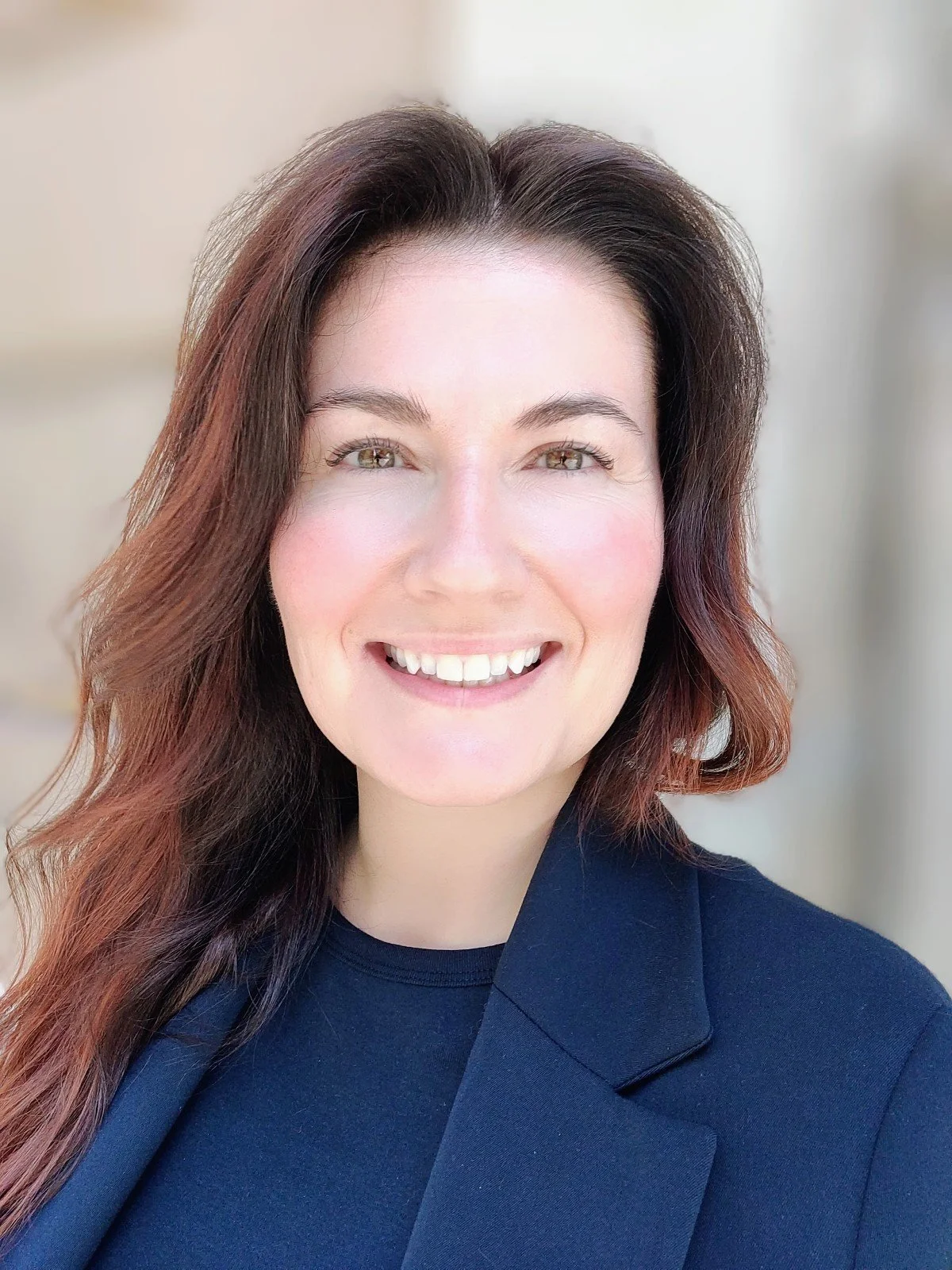
Who I am
I learned to read and write at four, and I have never put the pen down since. I am the author of seven nonfiction books and four photography monographs, because I tell stories in images as well as words, and I am writing my first novel now. I created Woman's Words, my writing publication, to give other women a place to find their voice on the page.
For more than twenty years I have mentored and taught women writers and creatives. I hold a PhD, and teaching certifications in writing and creativity. My students describe me as straightforward and calm, a guide who holds you to your word and offers tough love when the moment asks for it. No ship sinks under my watch.